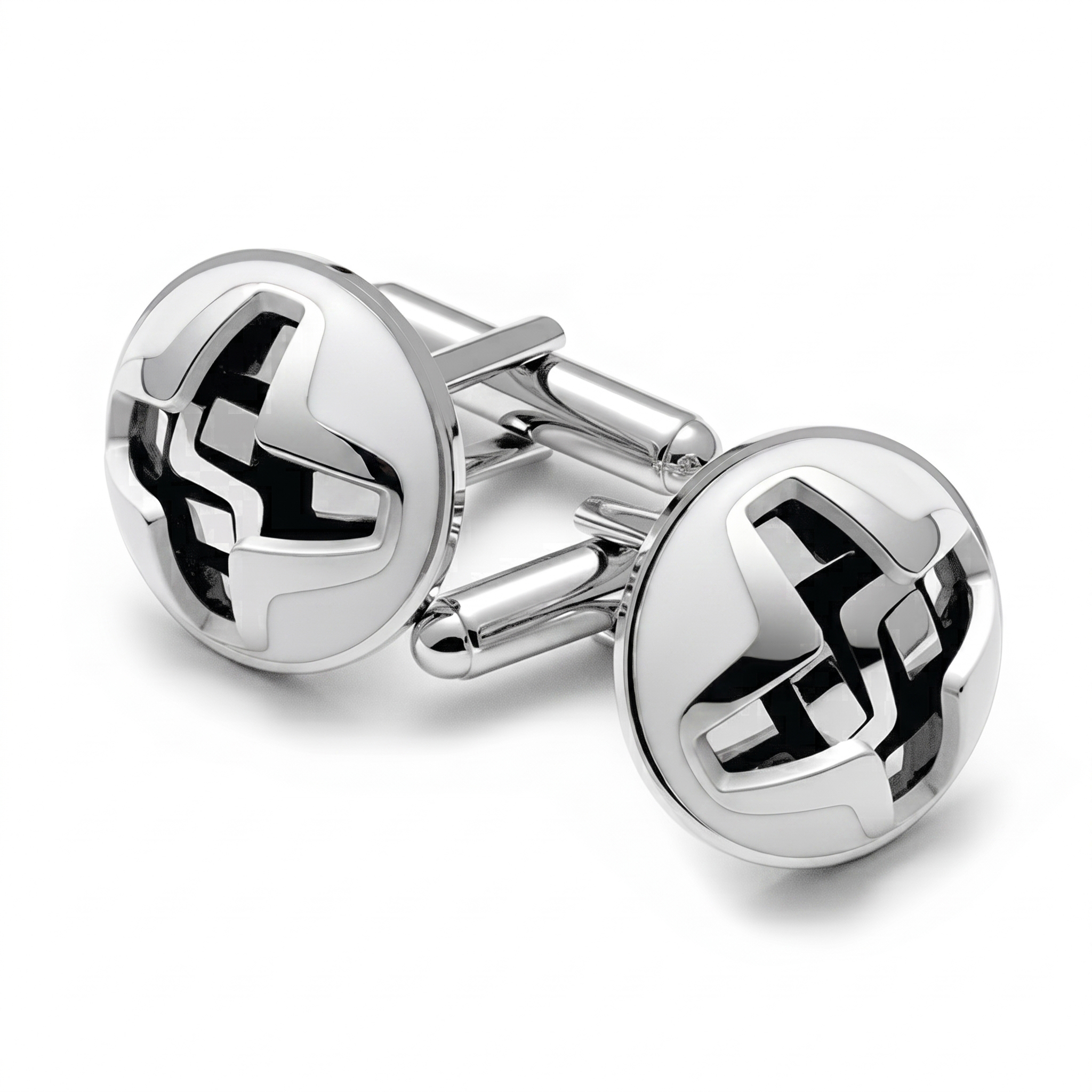
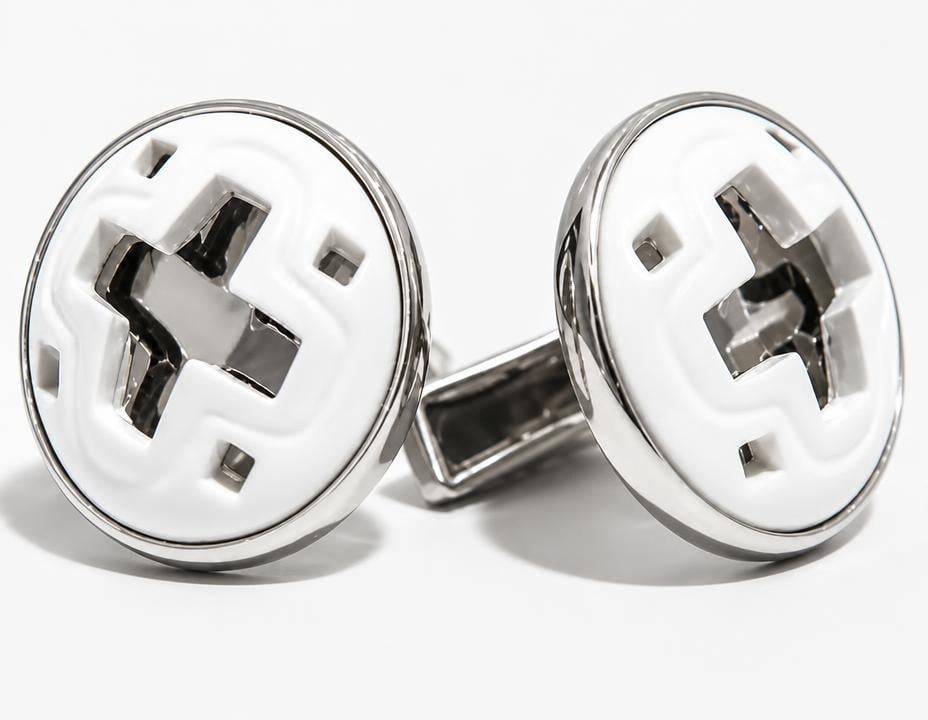
Yazılı is a cufflink design that holds three things from a single city. The stone, the silverwork, and the pattern all come from Eskişehir, and this cufflink design brings them together in one small object worn on the wrist.
Three crafts, one place
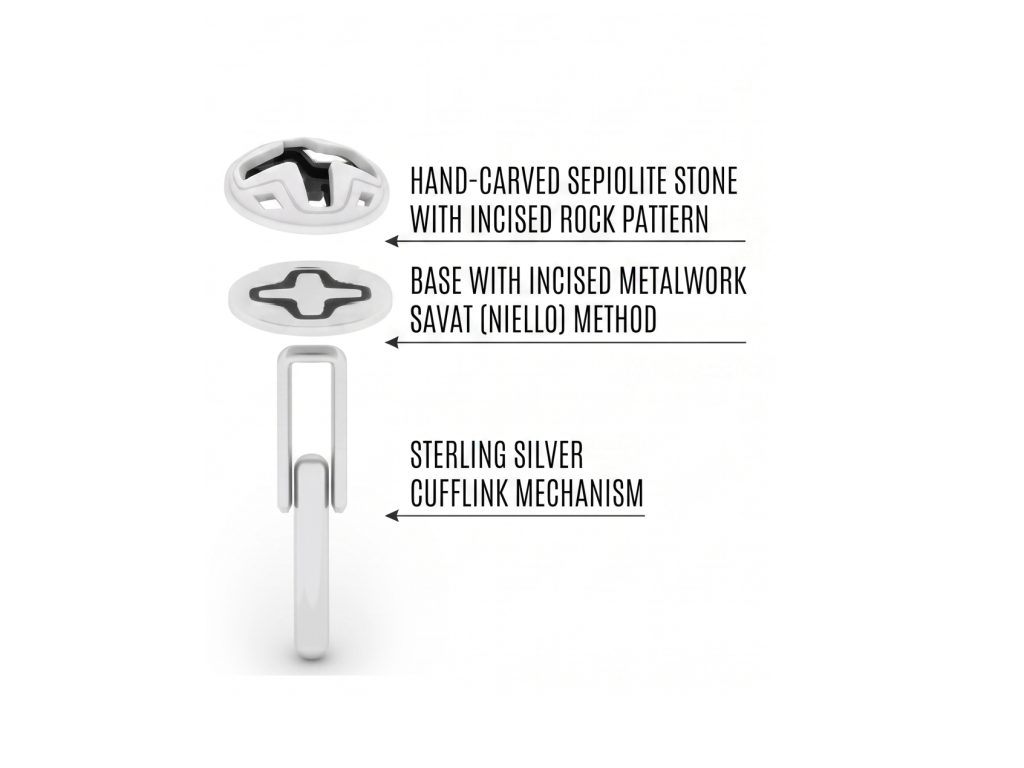
Eskişehir is known for meerschaum, a soft white stone usually carved into pipes, and for savat, a traditional silver technique known internationally as niello, where a dark inlay is worked into the metal. The pattern came from a third local source, Yazılıkaya, a Phrygian rock monument nearby, carved with dense geometric motifs. I took one of those motifs as the surface of the design. Stone, technique, and pattern, all from the same place, gathered onto one piece.
Turning the craft inside out
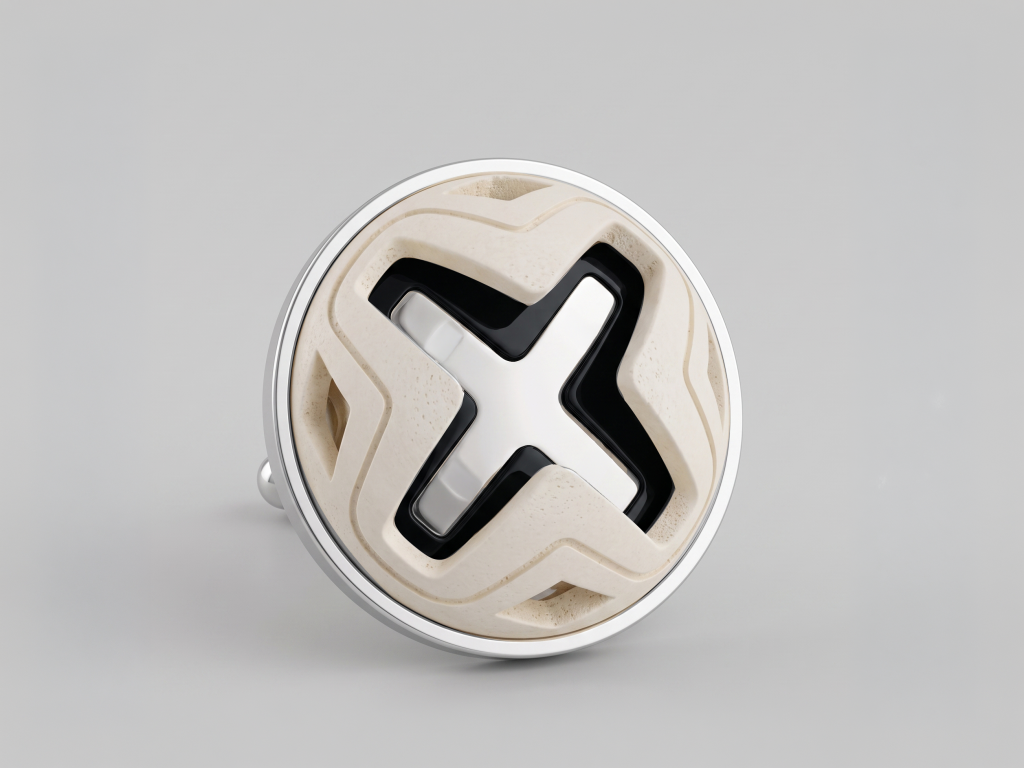
Meerschaum is almost always carved from the outside, cut down into a solid block, the way a pipe is made. For this cufflink design I did the opposite, and I did it twice over.
First I hollowed the stone from the inside into a thin domed shell. Then I carved the Yazılıkaya motif into the surface of that dome as an openwork pattern, cutting all the way through so the shell is pierced with gaps. Under the meerschaum sits a silver base worked with savat. Because the stone is both hollowed and pierced, the dark savat pattern shows through the openings in the pale stone. Two crafts stack into one small object, the carved white shell above, the black silver inlay reading through it from beneath.
Why a cufflink
Meerschaum is so tied to the pipe that the material almost disappears behind the object. I wanted to take it somewhere else, a different scale, a different kind of workmanship, a different way of wearing the stone. A cufflink let the material be seen as itself, a fine, worn, everyday piece instead of a collector’s pipe, and it let the two crafts sit close enough to read as one.

Where it stands
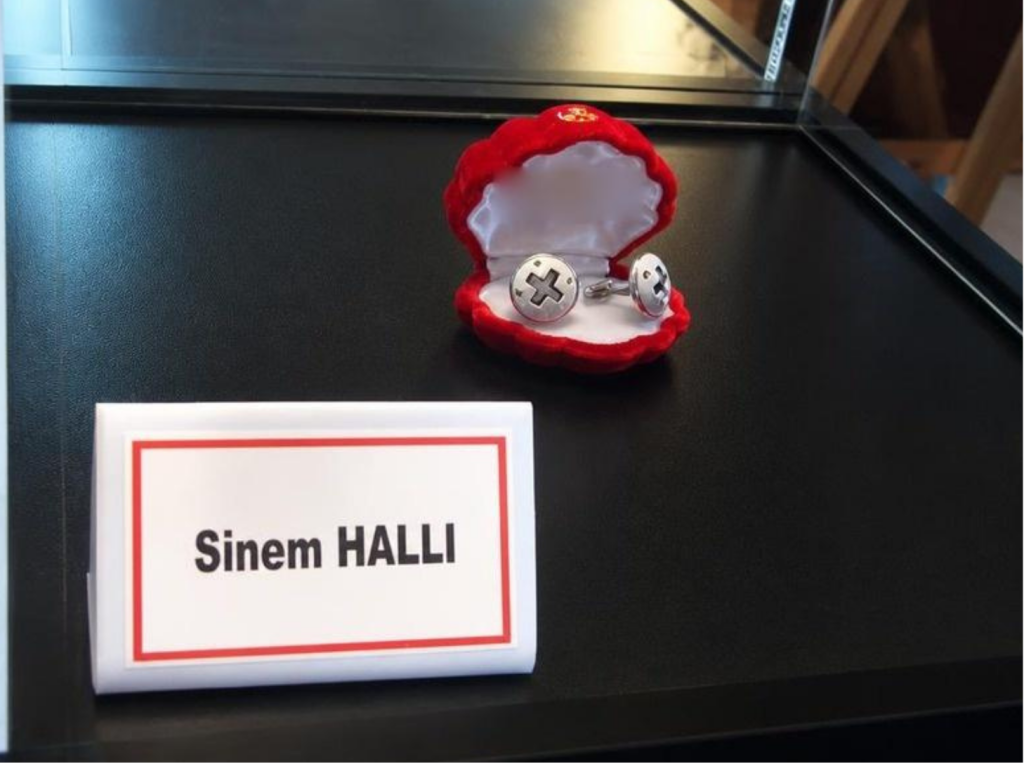
Yazılı won second place in the meerschaum design competition. The Eskişehir Governorship held it, and ETİ, a company from the same city, backed it. The jury was strong. It included the jeweler Sevan Bıçakçı and the jewelry designers Ela Cindoruk and Nazan Pak. It is now part of the permanent exhibition at the Eskişehir Meerschaum Museum, shown as a physical piece. From a student project, it became something a museum keeps, which for a cufflink design rooted so completely in one city feels like the right home for it.
Read the full design story on Behance.
Discover other cultural and product design projects by Sinem Hallı.
Designer: Sinem Hallı, Award-winning Industrial Designer
Year: 2010