
This modular pet furniture started from a simple wish, a pet product that does not look like one. A studio in Singapore came to me wanting soft forms and soft colours, something closer to their favourite Korean beauty and lifestyle brands than to a typical pet shop shelf. We started by talking about play pens, and that conversation is where the real idea came from.
Starting from the problem, not the object
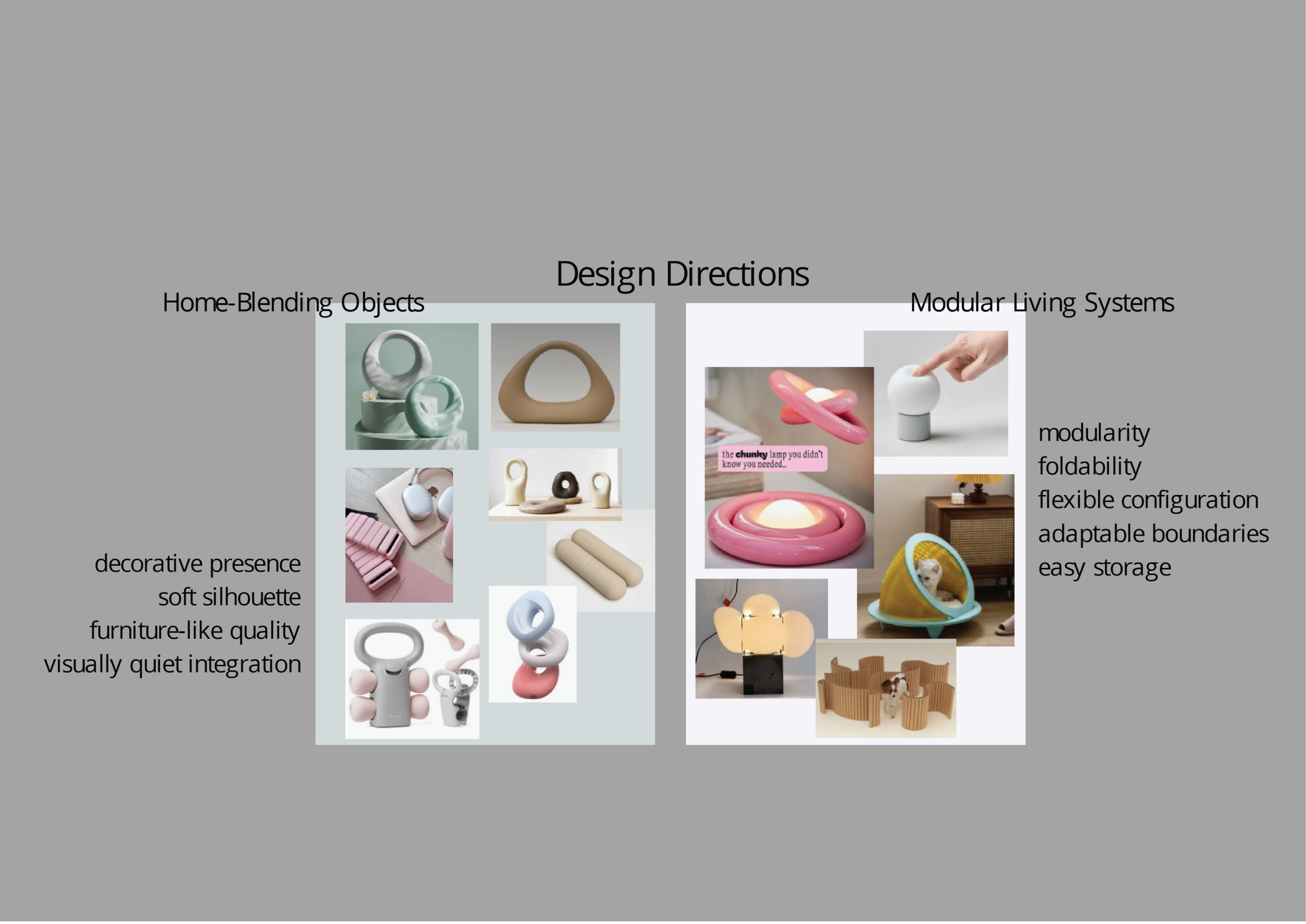
Most pet products announce themselves. Loud plastic, cage-like bars, shapes that only make sense as a dog thing or a cat thing. They sit in a home like an apology. I wanted the opposite, something that could live in a room as a piece of furniture, work for both cats and dogs, and never scream that it is a pet product.
So I did not start by drawing a pen. I started by mapping the whole territory, feeding, play, resting, carrying, toilet, senior access, and the boundary and zoning systems a home actually needs. Looking across all of it, one direction held the most promise, a modular boundary that defines space without turning the room into a cage.

A boundary you build
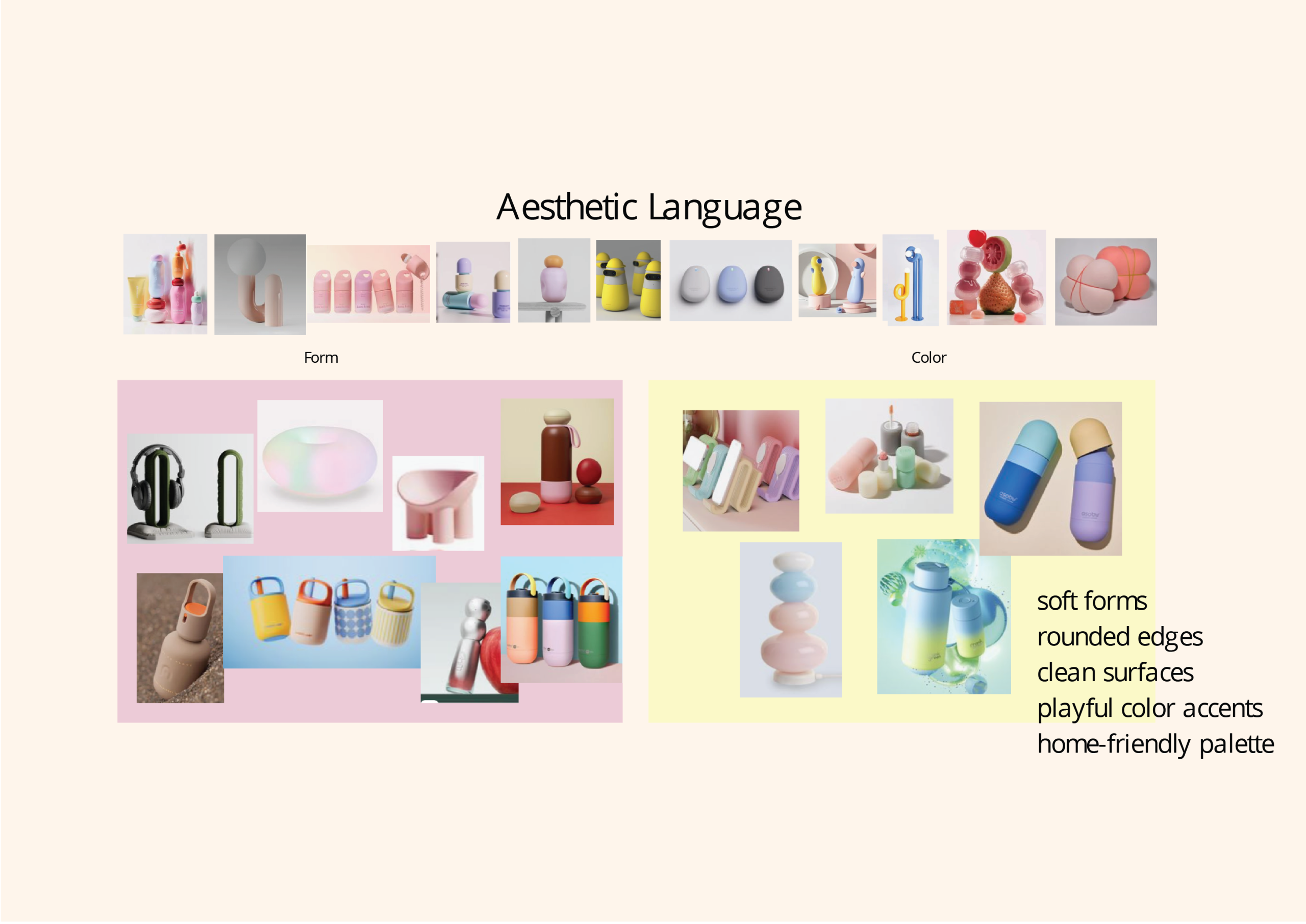
Instead of one fixed pen, I designed this modular pet furniture as a system of parts that connect and grow. You add pieces to make it bigger, change the shape to fit the room, and store it flat when you don’t need it. It works as a barrier, but also as a soft room divider, so it earns its place in the home instead of hiding in a corner. The aesthetic followed the brief and pushed it further, soft forms, rounded edges, clean surfaces, and a home-friendly palette of powder pink, butter yellow, sage, cream and lavender.

The geometry underneath
The part I care about most is how the system is built. The modules are based on Cairo pentagonal tiling, a way of filling a surface with five-sided shapes that feels organic but stays perfectly systematic. It gave me softened, natural-looking cells that still lock together with real structural logic. From that tiling I developed a small kit of parts, a basic unit, a base unit, a corner unit, and reflection-control acrylic panels for the windows. A few parts, combined in different ways, make many configurations.

Material and stability
The forms are soft powdered plastics, warm to look at and to touch, with satin-frosted acrylic panels that cut glare and keep the whole thing calm. For stability, the base units are weighted with a sand ballast, heavy enough to stay put against a determined dog, light and simple enough to stay easy to move and store.

Where it stands
This was the concept phase, delivered as a full design and market study. The direction was set, the system worked, and the language was clear. The collaboration paused before production for reasons on the client’s side, but the design stands on its own, a piece of modular pet furniture built to disappear into a home instead of taking it over.
Read the full design story on Behance.
Discover other product and brand projects by Sinem Hallı.
Designer: Sinem Hallı, Award-winning Industrial Designer
Client: Confidential (Singapore)
